
Few fears weigh more heavily on a parent’s heart than the fear of losing a child.
For parents raising teens who struggle with depression, anxiety, self-harm, substance use, or suicidal thoughts, that fear can become a constant companion. Many spend years searching for answers, trying every available resource, and wondering whether they are doing enough to keep their child safe.
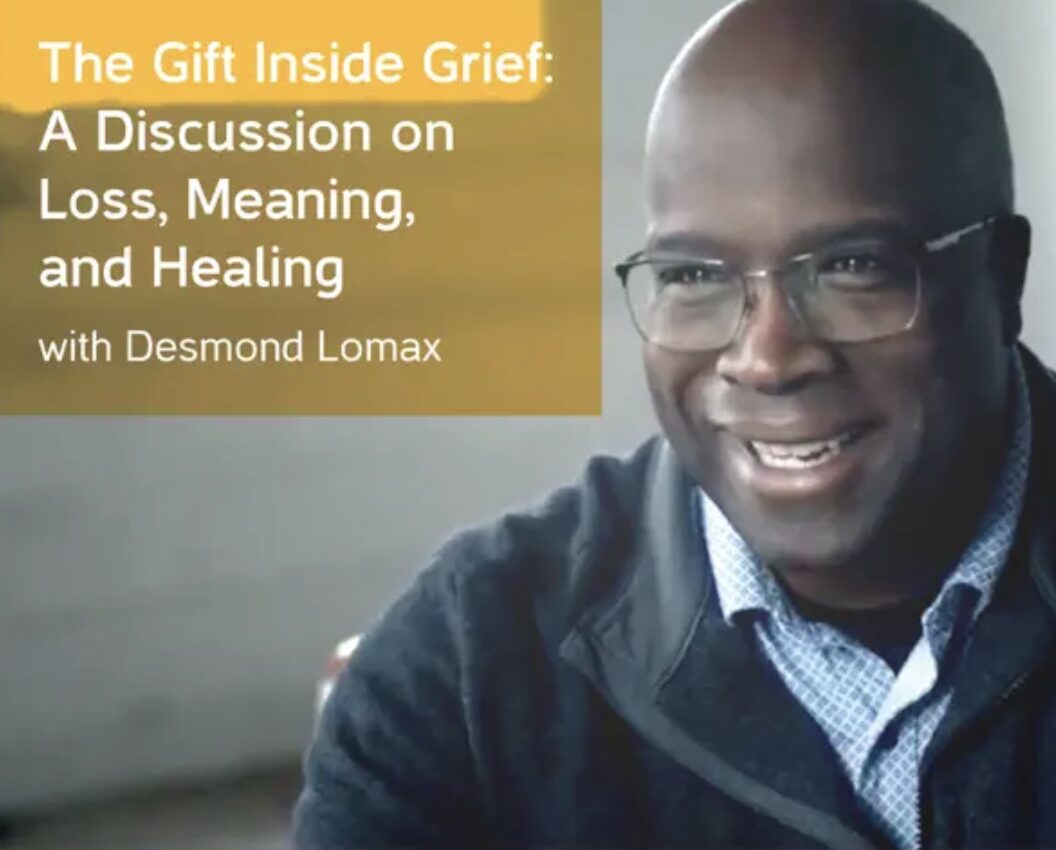
In a recent conversation on the *Ultimate Potential* podcast, therapist, consultant, and speaker Desmond Lomax shared insights born not only from decades of clinical work, but from personal tragedy. Six and a half years ago, Desmond lost his son to suicide. Since then, he has dedicated much of his life to helping others navigate grief, uncertainty, and the difficult realities of loving someone through mental health struggles.
His message offers a powerful reminder for parents: while we cannot control every outcome, we can choose how we love.
The Day Everything Changed
Desmond’s son was a freshman in college, a high-achieving student with a 4.0 GPA. To those around him, he appeared to be thriving. Yet beneath the surface, he was carrying struggles that few people fully understood.
The day before his death, Desmond spoke with him on the phone. Nothing seemed dramatically wrong. His son sounded tired, but there were no obvious warning signs that tragedy was imminent.
Then came the phone call every parent fears.
In an instant, Desmond’s understanding of life changed.
Like many parents, he had assumed certain things were guaranteed. He expected his children would outlive him. He expected there would be time to help, guide, and protect them. The loss shattered those assumptions and forced him to confront a difficult truth:
Life is far more uncertain than most of us want to admit.
Learning to Live with Uncertainty
One of the greatest challenges for parents of struggling teens is learning to live with uncertainty.
We naturally want guarantees. We want to believe that if we find the right therapist, enroll our child in the right program, say the right words, or make the right decisions, everything will turn out well.
But parenting does not come with guarantees.
Desmond believes that much of our suffering comes from believing we have more certainty and control than we actually do. When reality challenges that belief, we feel overwhelmed.
Accepting uncertainty does not mean becoming passive or hopeless. Instead, it means recognizing what is within our control and what is not.
We can love.
We can support.
We can show up.
We can create opportunities for healing.
But we cannot make choices for another person.
That realization is painful, but it can also be freeing.
Healing Does Not Mean Forgetting
Many people mistakenly believe that healing means reaching a point where the pain disappears.
Desmond rejects that idea.
Years after losing his son, he still cries. Certain anniversaries remain difficult. Birthdays bring fresh waves of grief. The pain has not vanished, and he does not expect it to.
Rather than seeing this as evidence that he is “not healed,” he views it as evidence that he loved deeply.
Love and loss are inseparable companions.
When we choose to love, we also choose vulnerability. We open ourselves to the possibility of heartbreak. The depth of our grief often reflects the depth of our connection.
For parents grieving a child, this perspective can be profoundly important. The goal is not to erase the pain. The goal is to learn how to carry it while continuing to live, connect, and find meaning.
The Burden of Shame and Guilt
Parents who lose a child to suicide often carry an additional burden: guilt.
Questions can become relentless:
* What did I miss?
* Could I have prevented this?
* Should I have done something differently?
* Was I somehow responsible?
Desmond’s response to those parents is both simple and powerful:
**You were enough.**
Most loving parents spend years sacrificing, worrying, advocating, and caring for their children. While no parent is perfect, many children who struggle with mental health challenges know they are loved.
Mental illness can be extraordinarily powerful. Sometimes a young person’s internal battle becomes overwhelming despite the efforts of caring family members, therapists, teachers, and friends.
This reality does not erase grief, but it can help reduce the crushing weight of self-blame.
Parents need to remember that loving deeply and losing painfully are not evidence of failure.
Your Greatest Leverage Is Love
One of the most impactful ideas Desmond shared comes from psychologist William Glasser’s Choice Theory.
As children grow older, they eventually discover a fundamental truth:
They can choose.
Parents cannot ultimately force a teenager to make healthy decisions. They cannot force recovery. They cannot force maturity. They cannot force change.
This realization can feel terrifying, particularly for parents watching a teen engage in self-destructive behaviors.
Yet Desmond argues that recognizing this truth helps parents focus on the one form of influence that never loses its power:
Love.
Love is not weakness.
Love is not permissiveness.
Love does not mean abandoning boundaries.
In fact, love often requires difficult conversations, firm limits, and painful consequences.
But love remains the foundation.
As children become adults, parental authority naturally diminishes. What remains is relationship. The quality of that relationship often determines whether children continue turning toward their parents during difficult seasons of life.
When parents shift their focus from controlling outcomes to maximizing love, they often discover a deeper and more meaningful connection with their child.
The Illusion of Control
Many parents spend years trying to manage every variable in their child’s life.
This instinct is understandable. After all, protecting children is one of the most fundamental responsibilities of parenthood.
The challenge arises when protection becomes control.
Desmond encourages parents to examine how much emotional energy they invest in trying to control things that ultimately belong to their child.
Teenagers make choices.
Young adults make choices.
Sometimes those choices are wise. Sometimes they are painful.
Parents can influence, guide, teach, support, and love. But they cannot live their child’s life for them.
Accepting this reality does not mean giving up. It means letting go of the illusion that control is the answer.
For many parents, that shift creates more peace, healthier relationships, and less chronic anxiety.
Turning Pain into Purpose
Loss can become a destructive force.
Or it can become fuel.
Desmond believes every person faces a choice after profound suffering.
Pain can consume us from the inside out, or it can be transformed into something meaningful.
Some people create foundations.
Some become advocates.
Some support other grieving families.
Others simply become more compassionate friends, neighbors, spouses, and parents.
The specific form matters less than the principle itself.
Pain that is given purpose often becomes a source of strength.
Pain that remains trapped often becomes a source of ongoing suffering.
The goal is not to deny grief. The goal is to use grief in a way that honors both the loss and the love that preceded it.
Challenging the Beliefs That Keep Us Stuck
One of Desmond’s most profound observations involves what he calls “constructs”—the beliefs and stories we carry about ourselves, our losses, and our circumstances.
After a tragedy, people often adopt beliefs that deepen their suffering:
* “I failed.”
* “I should have known.”
* “I can never be happy again.”
* “I don’t deserve peace.”
Desmond encourages people to challenge these beliefs.
Ask yourself:
* Is this belief helping me?
* Is it bringing me closer to love?
* Is it helping me honor the person I lost?
* Or is it keeping me trapped?
The work of healing often involves replacing destructive narratives with healthier, more compassionate truths.
That process is rarely quick. It often lasts a lifetime.
But it creates space for both grief and growth to coexist.
A Final Message for Parents
If you are parenting a struggling teen, you may feel exhausted, frightened, and uncertain about the future.
You may wonder whether you are doing enough.
You may fear that one day you will receive the phone call every parent dreads.
While no one can eliminate that fear entirely, Desmond’s message offers an important reminder:
Love is never wasted.
Whether your child is thriving, struggling, recovering, relapsing, succeeding, or failing, your capacity to love remains one of the most powerful gifts you can offer.
You cannot control every outcome.
You cannot eliminate every risk.
But you can maximize your love.
And in the end, that may be the most important thing a parent can do.
As Desmond’s experience demonstrates, life is uncertain. Yet that uncertainty can also sharpen our appreciation for each moment we have with the people we love.
Today is the opportunity to connect.
Today is the opportunity to say, “I love you.”
And today is the opportunity to choose love over fear.